
The role of digital craft portfolios in 2026

TL;DR:
- A digital craft portfolio showcases your best work, process notes, and professional growth to clients and employers. It enhances credibility, reflects your professional identity through reflection, and must combine strong design with technical performance for maximum impact. Regularly updating and optimizing your portfolio as a live evidence system increases client acquisition and demonstrates ongoing development.
A digital craft portfolio is a live, online collection of your best work, process notes, and professional story, and it is the single most persuasive tool a creative professional can use to win clients and advance their career. Unlike a CV, which lists what you claim to have done, a portfolio shows what you have actually made and how you think. For independent artists and craft designers, this distinction is the difference between being shortlisted and being overlooked. Platforms like Fueler and LinkedIn have made sharing a portfolio as simple as sending one link, and the role of digital craft portfolios has shifted from optional extra to professional necessity.
How digital craft portfolios drive hiring decisions
A portfolio provides evidence rather than assertion, and that shift in framing changes everything about how evaluators respond to your work. Hiring managers and commissioning clients do not want to guess whether you can deliver. They want to see the proof immediately.
Portfolios show actual work and thought process, enabling employers to evaluate evidence during screening rather than relying on subjective claims in a CV. This means a well-constructed portfolio can move you from the long list to the short list faster than any amount of carefully worded resume language.
“The portfolio’s main value is in pairing work artefacts with explanation and reflection to reduce evaluators’ uncertainty.” — SpacesEdu, Digital Portfolios vs Resumes: A Hiring Manager’s Perspective
There is an important technical nuance here, though. ATS systems may not access external portfolio content at all. Many Applicant Tracking Systems record a portfolio URL as plain text and never follow the link. This means your core skills must still appear as keywords within your CV or application document. A portfolio wins with human readers; your CV wins with the algorithm. You need both working together.
The most persuasive portfolios do three things consistently:
- Show the artefact. Include the finished piece, whether that is a card-making kit, a paper pattern design, or a digital illustration.
- Explain the context. Describe the brief, the constraints, and the audience you were designing for.
- State the outcome. What happened as a result? Was the design downloaded 500 times? Did the client commission a follow-up series?
Presenting the prompt, actions, and results with reflection helps evaluators map your thinking directly to their needs. Decoration alone does not do that. A beautifully presented portfolio with no process explanation is like a shop window with no prices: attractive, but not enough to close the sale.
Why portfolios build professional identity over time
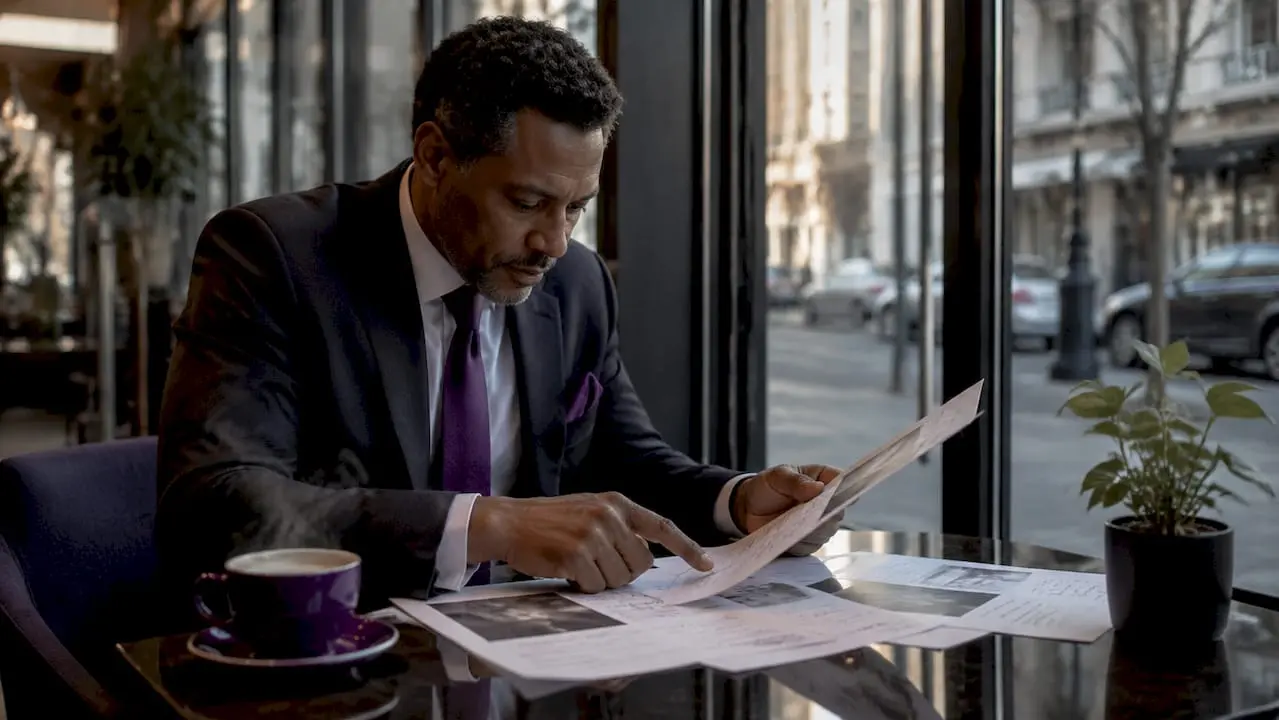
E-portfolios do more than display finished work. They function as reflective, living documents that track and shape your professional growth. E-portfolios document authentic practice and professional growth, linking portfolio curation directly to professional identity formation. That means every time you add a new piece and write a short reflection on it, you are actively building your professional self-concept, not just your archive.
For independent craft designers, this matters enormously. Your portfolio is your brand. It tells clients not just what you make, but how you work, what you value, and where your skills are heading. A portfolio that shows a clear progression from simple card-making templates to complex layered paper craft kits communicates ambition and development in a way that no biography paragraph ever could.
Here is a practical framework for using your portfolio as a growth tool:
- Review quarterly. Set a reminder every three months to assess which pieces still represent your best work and which have been superseded.
- Write a one-paragraph reflection for every new piece. Note what you tried, what worked, and what you would do differently.
- Align new additions with current demand. If seasonal craft trends are shifting towards botanical themes, add your strongest botanical work to the front of your portfolio.
- Remove outdated work. A portfolio with 40 mediocre pieces is weaker than one with 12 exceptional ones.
- Track which pieces attract the most enquiries. This data tells you where your commercial strengths actually lie, which may surprise you.
Pro Tip: Keep a private “reflection log” alongside your portfolio. For each piece, note the date added, the client or brief context, and one thing you learnt. After a year, this log becomes a powerful record of your professional development that you can reference in client conversations or job applications.
Portfolio curation is integral to long-term employability, shaping professional identity through continuous reflective practice. The craft professionals who grow fastest are not necessarily the most talented. They are the most deliberate about documenting and reflecting on their work.
Does portfolio design affect credibility?
Portfolio design affects credibility directly, and the relationship is not what most creatives assume. Visual storytelling aligned with skills signals credibility, whereas unsupported aesthetics reduce perceived employability. In plain terms: a gorgeous portfolio with thin content actually works against you.
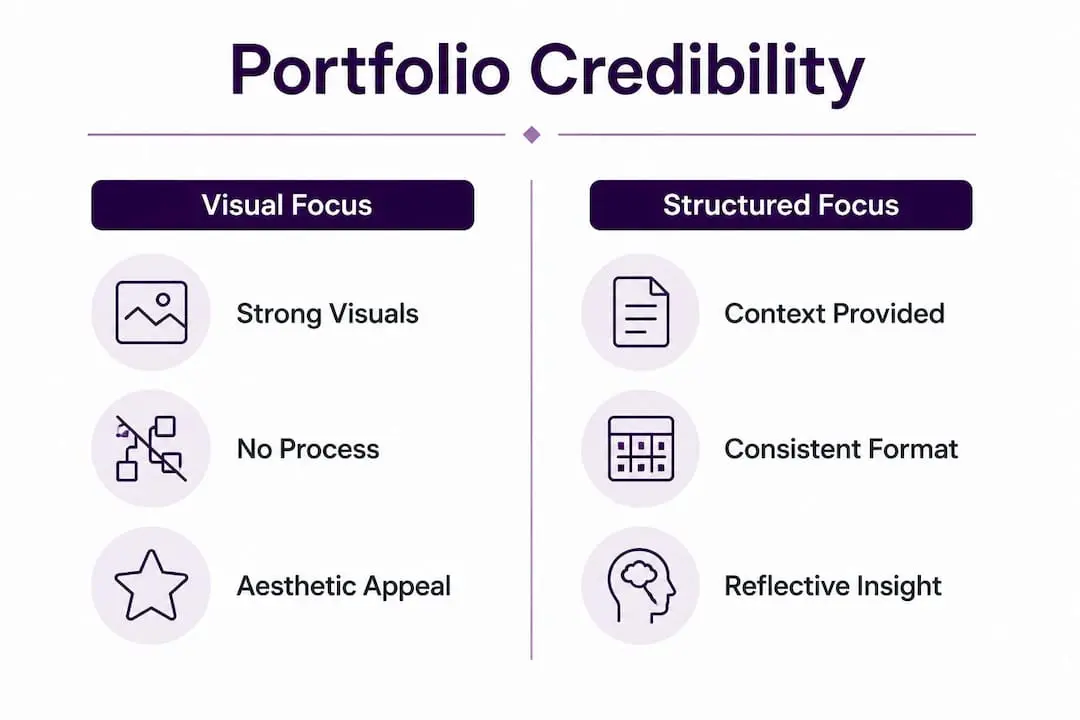
The table below contrasts two common portfolio approaches and their likely impact on client or employer perception.
| Approach | What It Signals | Likely Outcome |
|---|---|---|
| Strong visuals, no process explanation | Aesthetic skill only | Uncertainty about problem-solving ability |
| Strong visuals with context and reflection | Skill plus professional thinking | Higher shortlisting probability |
| Minimal design, rich process documentation | Substance over style | Credible but may lose attention quickly |
| Balanced design with clear narrative structure | Professionalism and capability | Most persuasive combination |
The most credible portfolios follow a consistent structure for each piece. First, state the brief or context in one or two sentences. Then show the work. Then explain the decision-making behind it. Finally, note the outcome or what you learnt. This four-part structure works whether you are presenting a printable Christmas card kit or a full paper craft collection.
Accessibility is also a credibility signal that most creatives overlook entirely. If your portfolio does not load correctly on a mobile phone, or if your colour choices make text hard to read for visitors with visual impairments, you are communicating carelessness. Use sufficient colour contrast, descriptive image alt text, and legible font sizes throughout.
Pro Tip: Ask someone outside your field to review your portfolio and tell you what they think you do for a living. If their answer does not match your actual specialism, your narrative structure needs work.
What technical standards should your portfolio meet?
Portfolio site performance is a direct conversion factor, not a background concern. Slow or shifting pages discourage visitors from engaging deeply with your work, which means they leave before they ever reach your best pieces. Google’s Core Web Vitals framework provides the clearest technical benchmark for portfolio sites in 2026.
The three metrics that matter most are:
- Largest Contentful Paint (LCP). This measures how quickly your main content loads. For portfolio sites, the hero image is almost always the LCP element. Preload it explicitly in your HTML rather than relying on lazy-loading, which delays it.
- Interaction to Next Paint (INP). This measures how quickly your site responds to clicks and taps. Heavy JavaScript frameworks can inflate INP scores significantly. Keep scripts lean.
- Cumulative Layout Shift (CLS). This measures visual stability. If images or text blocks jump around as the page loads, your CLS score suffers. Always define image dimensions in your CSS to prevent layout shifts.
Preloading hero images and optimising interaction speed improves user experience and retention. A visitor who stays on your portfolio for three minutes is far more likely to contact you than one who bounces in thirty seconds.
Two further technical points deserve attention. First, make your portfolio text-based where possible. Embedding all your work descriptions inside images means search engines and ATS tools cannot read them. Write your context and reflection as actual HTML text, not as part of a graphic. Second, test your portfolio on a mid-range Android phone on a 4G connection, not just on your own fast laptop. Most of your visitors will not have your hardware.
How to use your portfolio for client acquisition
A portfolio that sits unshared is a missed opportunity. Digital portfolios can be updated from anywhere via a single link, which makes them far more practical for active client acquisition than any static document. The key is treating your portfolio as a live sales tool rather than an archive.
Follow this sequence to integrate your portfolio into your client acquisition process:
- Create one permanent, shareable URL. Use a custom domain if possible. A link like yourname.com/portfolio is more professional and more memorable than a long platform-generated URL.
- Update before every pitch. Before you send a proposal or approach a new client, check that your most relevant work is prominent. If you are pitching a greetings card publisher, your card-making work should be the first thing they see.
- Align content with seasonal demand. Sharing digital crafts at the right moment in the seasonal calendar significantly increases engagement. Rotate your portfolio’s featured work to reflect current buying patterns.
- Use Fueler or LinkedIn to increase discoverability. Both platforms index portfolio content and surface it to relevant audiences. Fueler is particularly useful for creative freelancers because it is built specifically for portfolio-led professional discovery.
- Combine your portfolio with social sharing. A portfolio link shared alongside a process video or a behind-the-scenes post on Instagram or Pinterest generates far more traffic than a cold link alone.
Regularly swapping in top work tied to current client demands maximises portfolio impact. The professionals who treat their portfolio as a living document, rather than something they built once and forgot, consistently report stronger client pipelines.
Key takeaways
A digital craft portfolio is most effective when it combines strong visual work with process reflection, technical performance, and regular updates aligned to current client demand.
| Point | Details |
|---|---|
| Portfolios outperform CVs with humans | Show actual work and decision-making to reduce evaluator uncertainty and speed up shortlisting. |
| Reflection drives professional identity | Adding context and reflection to each piece builds your professional brand over time. |
| Design credibility requires substance | Visual storytelling without process explanation reduces perceived employability, not increases it. |
| Technical performance affects conversion | Optimise Core Web Vitals, especially LCP and CLS, to keep visitors engaged long enough to reach your work. |
| Live updating maximises client acquisition | Treat your portfolio as a live sales tool, rotating featured work to match current client demand and seasonal trends. |
The living evidence system: a practitioner’s view
The framing I find most useful for digital craft portfolios is this: think of yours as a living evidence system, not a gallery. A gallery is static. An evidence system is constantly being tested, updated, and refined against real-world feedback.
Most creatives I have spoken with build their portfolio once, feel relieved it is done, and then leave it untouched for two years. That is the single biggest mistake in portfolio management. The work you were proudest of in 2024 may not represent your current capability or your current market positioning. Leaving it front and centre tells clients you have not grown.
The second thing I would push back on is the assumption that a beautiful portfolio is automatically a persuasive one. I have reviewed portfolios that looked extraordinary and told me almost nothing about whether the person could solve a real brief. Conversely, I have seen quite plainly designed portfolios that were so clear about process and outcome that I would have commissioned the work on the spot. The persuasive power sits in the reflection, not the decoration.
The technical side is where most independent creatives genuinely underinvest. A portfolio that loads slowly or breaks on mobile is not just an inconvenience. It is a signal about your attention to detail. If you cannot maintain your own professional presence, why would a client trust you to maintain theirs? Core Web Vitals are not an advanced developer concern. They are a basic professional standard in 2026.
Finally, the role of social sharing for crafters in amplifying portfolio reach is still underused. Your portfolio does not market itself. Pairing it with consistent, platform-appropriate sharing is what turns a good portfolio into a client acquisition engine.
— Rob
Build your craft portfolio with Craftsuprint
If you are ready to put the principles in this article into practice, Craftsuprint gives you a strong starting point. The platform supports independent craft designers with downloadable resources, printable project kits, and a marketplace where your work can be discovered by a community of active craft enthusiasts.
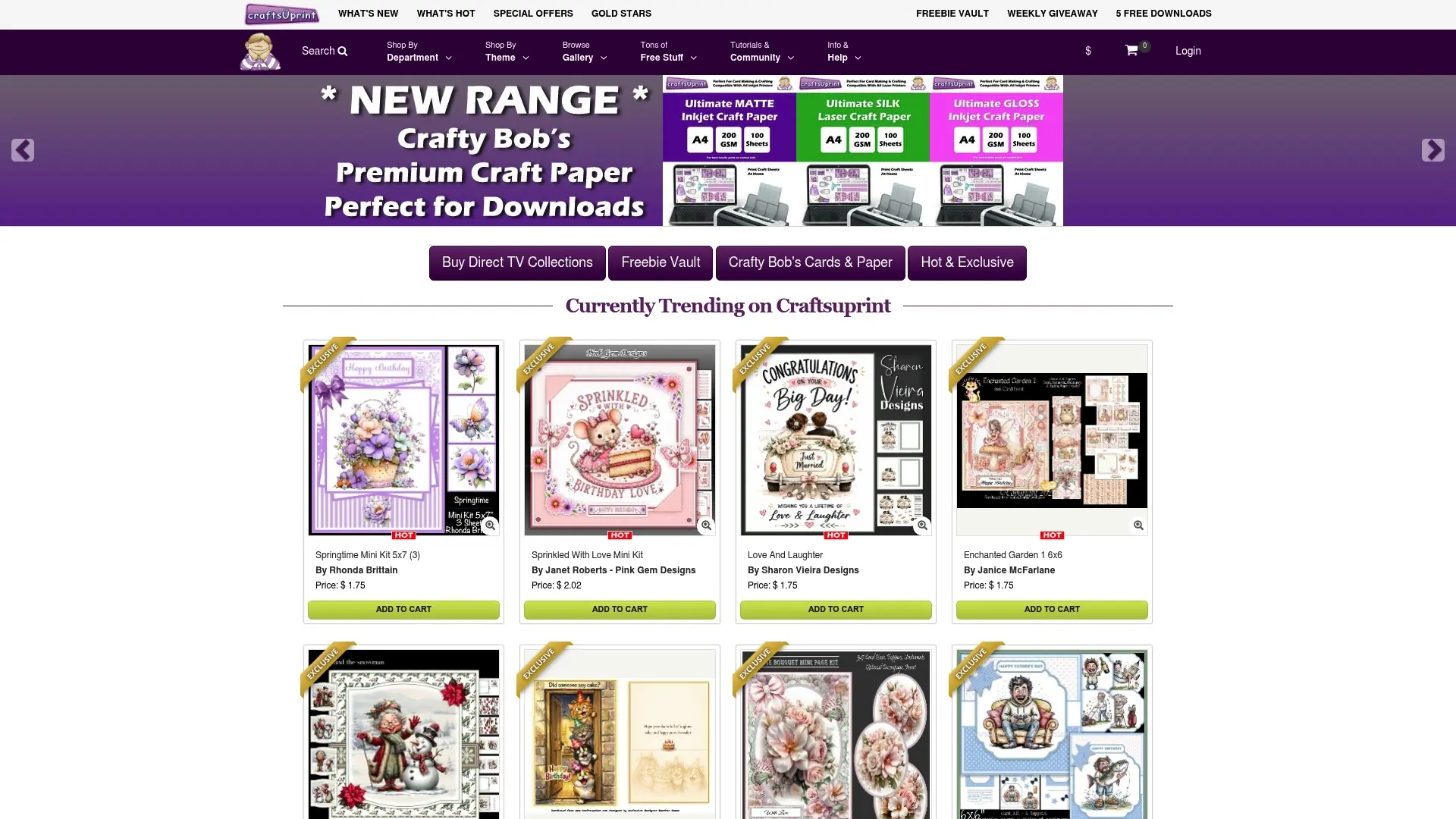
Whether you are building your first portfolio or refreshing an existing one, Craftsuprint’s range of craft supplies and downloads gives you the raw material to create portfolio-worthy pieces. New members can also claim a free members gift to get started without any upfront cost. Explore the full catalogue and find the resources that match your current specialism and your next portfolio update.
FAQ
What is a digital craft portfolio?
A digital craft portfolio is an online collection of your best creative work, including process notes and outcomes, accessible via a single shareable link. Unlike a CV, it provides immediate, verifiable evidence of your skills and professional thinking.
How does a portfolio differ from a resume for creative roles?
A resume lists claimed skills and experience, whereas a portfolio shows actual work and decision-making. Hiring managers and clients can evaluate a portfolio immediately without guessing, which speeds up shortlisting significantly.
How often should i update my digital portfolio?
Review and update your portfolio at least quarterly. Swap in your strongest recent work, remove outdated pieces, and align featured content with current client demand or seasonal trends to keep it relevant.
Do ATS systems read portfolio content?
Many ATS platforms record portfolio links as plain text and do not follow them, meaning your portfolio content is invisible to the algorithm. Always include your key skills as keywords within your CV or application document as well.
What technical factors affect portfolio performance?
Core Web Vitals are the primary technical benchmark for portfolio sites in 2026. Prioritise fast Largest Contentful Paint by preloading hero images, minimise layout shifts by defining image dimensions, and keep JavaScript lean to improve interaction speed.